So you got an external monitor to use with your MacBook or you’ve upped your game and got yourself two of them. Coding will never be the same, I’m telling you. Neither will writing, or research. With all that room you can have a lot of fun with multiple windows arranged just the way you like it.
- Mac App Display External Monitor Screen
- Mac Using External Monitor
- Mac External Display Only
- Mac App Display External Monitors
But when you attach a monitor to your Mac, it will default to mirroring mode. And that’s just the start of all the things you’ll need to change before the awesome productivity dream materializes. To make it easier for you, I’ve compiled all the multi-monitor pitfalls in this article. They include how to use your Mac in clamshell mode, how to configure multi-monitor displays, find awesome panoramic wallpapers and most importantly, how to take care of window management.
A note about connectors:Nov 27, 2016 Dell S2240T multitouch monitor (when it's in its own minimal power sleep mode) won't wake the Mac up again - but a Magic Trackpad click does wake the Mac, which then wakes up the monitor. Then I can mix-&-match the familiar OS X trackpad gestures on either the monitor screen or the Magic Trackpad, whichever is most convenient in the moment. Use an external display with your MacBook Pro The Thunderbolt 3 ports on your MacBook Pro support video output. You can use an external display, a projector, or an HDTV with your MacBook Pro. Connect a VGA display or projector: Use a USB-C VGA Multiport Adapter to connect the display to a Thunderbolt 3 (USB-C) port on your MacBook Pro. Aug 02, 2019 Another thing to have in mind is that, since the introduction of the Mavericks version, all monitors display the Menu bar. However, it is used to designate the primary display in the Display settings. Extend Your Primary Display. Mac OS X also allows you to extend your primary display to the external monitor. Here’s how it works. Jan 16, 2020 In the case of external display issues with your Mac, it’s also a good idea to check out the resolution and Refresh rate parameters. Click on System Preferences Display and use 1024×768 as a start. External Display Flickering/blinking issues with macOS Catalina.
MacBooks come with Thunderbolt ports but they are backwards compatible with mini DisplayPort. Plus mDP to HDMI convertors are pretty cheap. And although I don’t have any personal experience with them, you can also find USB to HDMI convertors if you want to attach more than one display.Setting Up The Clamshell Mode
If you’ve got a huge external monitor and wish to dock it with a MacBook and attach Bluetooth keyboard and mouse instead of creating a multi-monitor setup, you’ll need to use the clamshell mode.
All you do is connect your display to MacBook via the Thunderbolt adaptor and connect the power cable. Shut the lid and your MacBook now works as a desktop CPU unit. The most important part here is the power cable, without that your Mac will just go to sleep as soon as the lid is closed.
Default Display
If you want to change the default monitor from your MacBook’s screen to one of the connected displays, go to System Preferences ->Displays and you’ll see an Arrangement tab. This lists all the available monitors. First, make sure the Mirror Displays option is deselected.
In there you’ll see the menu bar sitting atop your MacBook’s display. Just click and drag it over to any of your external displays to make that one the default monitor.
Arranging Displays
In the same Arrangement screen you can drag the displays around to change the placement. If you’re mounting your external display above and your MacBook’s screen below, you can go ahead and drop it on top.
The display sizes are scaled accordingly. So if you have 27 and 24 inch monitors connected to a 13 inch MacBook, you won’t have any problems figuring out which is which. Replicate your physical monitor setup in this window to make the transition between multiple displays really easy.
Managing Workspaces
Thanks to Mavericks, the multi-monitor capabilities of Macs have improved exponentially. Now every new display gets its own workspace and you can create different desktops or fullscreen apps for individual monitors.
This is great if you plan on using one monitor just for media, to monitor your website, or for social media updates. The Mac will also remember these workspaces so you don’t have to start from scratch every time.
Multi Monitor Wallpapers
When it comes to multi-monitor wallpapers, Mac is kind of weird. When you right-click on the desktop and select Change Desktop Background the app will actually bring up the wallpaper picker window on each different screen.
Of course, there are apps out there that make the process of applying panoramic wallpapers easy but most of them are paid. But you can still do it for free; all you have to do is download panoramic wallpapers that are already cut out for individual screens. You can do that with Wallpaperfusion or dualmonitorbackgrounds.com.
Once you have your cut out wallpapers downloaded, select that folder from the sidebar and choose the relevant images for each screen.
Window Management with BetterTouchTool
And now we come to a grave problem with the Mac that only amplifies itself when you add more displays. Window management. Windows has great window management (had to live up to the name, I guess), where everything is tight and snaps into place.
Mac’s more liberal philosophy spills over into window management as well, where it can’t afford to be. You can’t fling a window to the side with one gesture, telling it to take up exactly 50% of your screen like you can in Windows with the Aero Snap feature.
Wait – actually, you can. Thanks to an awesome free app called BetterTouchTool. I’ve written about it in detail before but it’s basically an app that lets you create custom gestures for trackpad, keyboard and mouse (more on that below), and as a cherry on top, adds the same window snapping features.
Once you’ve activated the Window Snapping feature from the pop-up and given the app accessibility permissions, it’s time to get snapping!
Just click and drag any window to the left or right edge to make it take up half the screen. Moreover, you can go to the corners to allot your window to the relevant quarter of the screen.
Finally, dragging a window up to the menu bar expands the window on the current screen (not to be confused with the fullscreen mode). The best part is that the app gives you a little preview of the exact space the window will take while you’re still holding the mouse on the hot corner.
As you’d imagine, this window snapping doesn’t always work between multiple monitors. But fear not, because alternatives exist and they are discussed below.
Window Management With Multiple Monitors Using Shortcuts
As I said above, BetterTouchTool lets you map specific actions to trackpad, keyboard and mouse shortcuts. And BetterTouchTool has an amazing library of window management actions. You know where this is going.
From all the great actions available, here are the highlights.
- Move window one space/desktop left or right
- Maximize window to the next monitor
- Move window to the next monitor
- Plus all the window snapping shortcuts and a lot more can be turned into actions
That’s right, using a keyboard/mouse shortcut or just a trackpad gesture, you can fling the current window either to the next monitor or make it full screen when it gets there.
As you can see below, I’m unable to dock the window to the right side of the screen. But thanks to some pre-configured shortcuts, I am able to do so. Using similar keyboard shortcuts, I can fling the window to another monitor as well.
You’ll find a lot of apps out there for doing these things. In my research I found apps ranging from $5 to $20 dedicated to window management. But I’m telling you, you don’t need them. BetterTouchTool will take some time to set up but once done it will be your setup. You can set any kind of crazy keyboard shortcut or trackpad gesture for snapping or moving windows. It will be personal and intuitive, and it will work.
Here’s what I say to everyone after I recommend BetterTouchTool and I’ll say it to you as well.
Go Crazy.
A Simpler Alternative To BetterTouchTool
If you find the feature set overwhelming and don’t want to endlessly customize BTT, try Spectacle. It’s a little app that comes pre-programmed with keyboard shortcuts (that are customizable) for the same kind of window snapping features of BTT. There’s also a shortcut for flinging a window to another display.
The above article may contain affiliate links which help support Guiding Tech. However, it does not affect our editorial integrity. The content remains unbiased and authentic.Also See#monitor #Software
Did You Know
Initially, OnePlus aimed at selling around 30,000 OnePlus One units, however, it sold more than 1.5 million units!
More in Mac
Top 5 iCloud Drive Alternatives for iPhone and Mac
Before you begin
You can resolve many display issues by updating the software on your Apple devices, cables, and adapters. If you can see an image on your screen, check for software updates using the Mac App Store:
- Connect your external display and any Apple video cables or adapters that you use with it.
- From the Apple menu, choose App Store.
- Click the Updates button in the App Store window.
- Install any macOS or firmware updates that are listed.
If you're using a display, hub, extender, or adapter not made by Apple, check with the manufacturer for any updates that might be available.
If you're trying to connect a 4K display or Ultra HD TV with your Mac, make sure your computer meets the requirements for using these external displays.
If your software and firmware are up to date, or if you can't see the image on your screen, try the steps below for your specific issue.
If the display image is blank or unusable
Try these steps if you don't see an image on your display. These steps can also help if the image on your screen repeatedly turns on and off (flickers), if horizontal lines appear (snow), or if the image is distorted (torn or scrambled).
These steps likely won't help if the issue is only happening in one app. If you see similar issues in only one window or app, check with the app's developer for updates or more help.
Check connections
Check the connections to your Mac and external displays:
- If you're using an Apple notebook, try connecting its power adapter.
- Make sure the external display's power cable is securely connected and that your display is turned on.
- If you're using a Mac Pro (Late 2013) make sure your displays are connected to the right ports.
- If you're using a display hub, switchbox, or 'KVM,' try connecting your display's video cable directly to your Mac instead.
- Disconnect the video cable where it plugs into your Mac, then plug it back in to reseat the connection.
- If you're using a video adapter, unplug the video adapter from your Mac, then plug it back in to reseat the connection.
- If you're using more than one video adapter to connect your display (the adapters are 'chained' together), try connecting the display using only one adapter if possible. Some video adapters can't be connected together. For example, a mini DisplayPort to DVI adapter can't be connected to a DVI to HDMI adapter.
- If your display has more than one video connection, see if using another connection on the display works. If possible, check to see if using a different display or a different adapter works.
- Try using a different cable that you know is in working order. Check with the display's manufacturer to make sure you're using the cable they recommend.
- Restart the Mac with the display connected.
Detect your display
If you're using an external display, sleep and wake your Mac to make it check for connected displays:
- Press the power button on your computer to put it to sleep, or choose Apple menu > Sleep.
- Wait a few moments, then press a key on your keyboard or click your mouse or trackpad to wake your Mac.
If you're using more than one display, and you can see the image on one of the displays, you can also use Displays preferences to check for connected displays.
Adjust video settings
Mac App Display External Monitor Screen
If there's no image on your display, try adjusting your display's brightness or contrast. If there's still no image, or the image appears torn or scrambled, try selecting a different video resolution in System Preferences.
Adjust brightness
- If you're using an Apple Display, press the increase brightness key on your Apple keyboard. To adjust the brightness of a secondary display, press Control-F2.
- If you're using a display that's not made by Apple, check the documentation that came with your display to see if it includes built-in controls for adjusting its brightness or contrast.
Change your display resolution
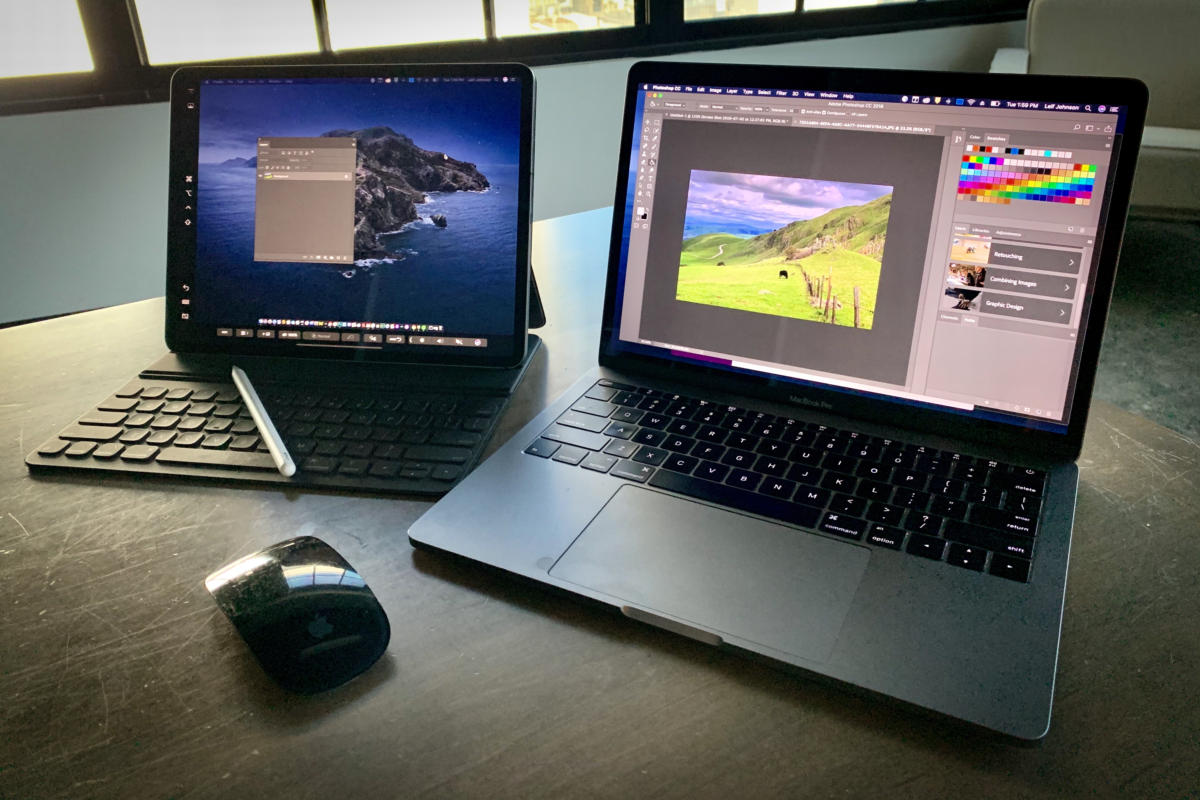
- From the Apple menu, choose System Preferences.
- Click the Displays icon.
- Click Default for display. If you see more than one resolution listed, choose a resolution and refresh rate. If the display turns off when you change resolutions, press the escape key to undo the change.
If you can't change the resolution of your display because you can't see an image, restart your Mac in safe mode to reset the display resolution to defaults.
If starting in safe mode doesn't resolve the issue, reset your Mac's NVRAM and SMC to reset the video ports on your Mac to their defaults.
Check for third-party display software
If your display works only when your Mac is started in safe mode, and you have display-related software installed, check with the software's developer for updates, or try temporarily uninstalling it.
If an image appears fuzzy or blurry
If images or text on your display appear pixelated or blurry, check these things.
Check your display resolution
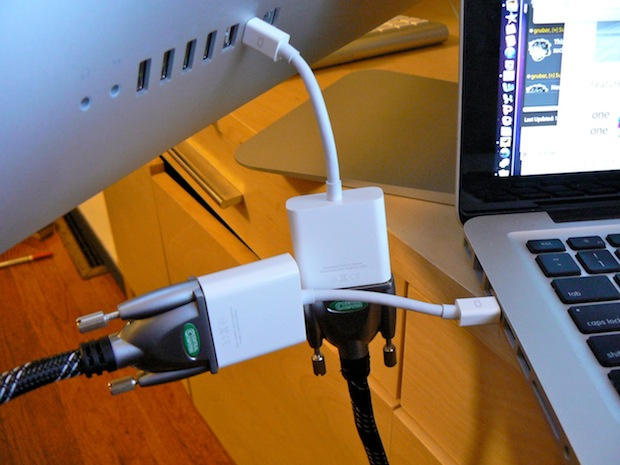
Make sure your display resolution in System Preferences is set to its default. If you're using a resolution that's scaled, the image might be magnified to fit the display. This can cause the image to look blurry in some apps.
- From the Apple menu, choose System Preferences.
- Click the Displays icon.
- Select Default for display.
If you use a monitor or an HDTV connected with an HDMI cable, you might see a difference in video quality if your display is set to television mode. Check your display for a 'monitor mode' setting to get the best video quality.
Retina displays
If an app you're using appears low resolution on your Retina display, check to see if an update to the app is available. Most apps have been updated to use the higher pixel densities of Retina displays.
Lower-resolution images on some web pages might also appear 'softer' when viewed on a Retina display. This is because Retina displays have a higher pixel density and not all websites use Retina-ready images.
For example, the images below look different when viewed on a Retina display, but the same on a non-Retina display. This happens because the Retina-ready image has a higher pixel density:
If you see contrast or color issues
If your entire display image seems too dark or too bright, you can adjust the brightness and contrast from the Displays pane of System Preferences, or by using your display's built-in controls.
Adjust brightness and contrast
To adjust the brightness of your Apple display, press the brightness key or F2 key on your keyboard. You can also use the brightness adjustment for each connected display in System Preferences > Displays.
Displays not made by Apple sometimes have brightness and color adjustments built into the display. Check the documentation for your display to see if it includes built-in controls.
When you connect a display, projector, or HDTV using an HDMI cable, you might see a difference in video quality if your display is set to television mode. Check your device for a 'monitor mode' setting to achieve the best video quality.
You can also calibrate each display from the Color tab of Displays preferences to get the best color and brightness from your display.
If you see bright or dark pixels
If individual pixels on your display seem too bright or too dark, see these articles for more help:
Connecting displays with Thunderbolt 3 (USB-C)
The Apple Thunderbolt 3 (USB-C) to Thunderbolt 2 Adapter connects Mac models with Thunderbolt 3 (USB-C) ports to older devices that use Thunderbolt (10Gbps) or Thunderbolt 2 (20Gbps). For example, this is the adapter that you should use to connect your MacBook Pro to an Apple Thunderbolt Display or a third-party Thunderbolt 2 storage device.
This adapter doesn't support connections to Mini DisplayPort displays, including the following Apple adapters and displays:
- Apple Mini DisplayPort to Dual-Link DVI Adapter
- Apple Mini DisplayPort to DVI Adapter
- Apple Mini DisplayPort to VGA Adapter
- Apple LED Cinema Display
If you're using the Thunderbolt 3 (USB-C) to Thunderbolt 2 Adapter to connect to a compatible display and the display doesn't show an image, try unplugging the adapter and plugging it back in.
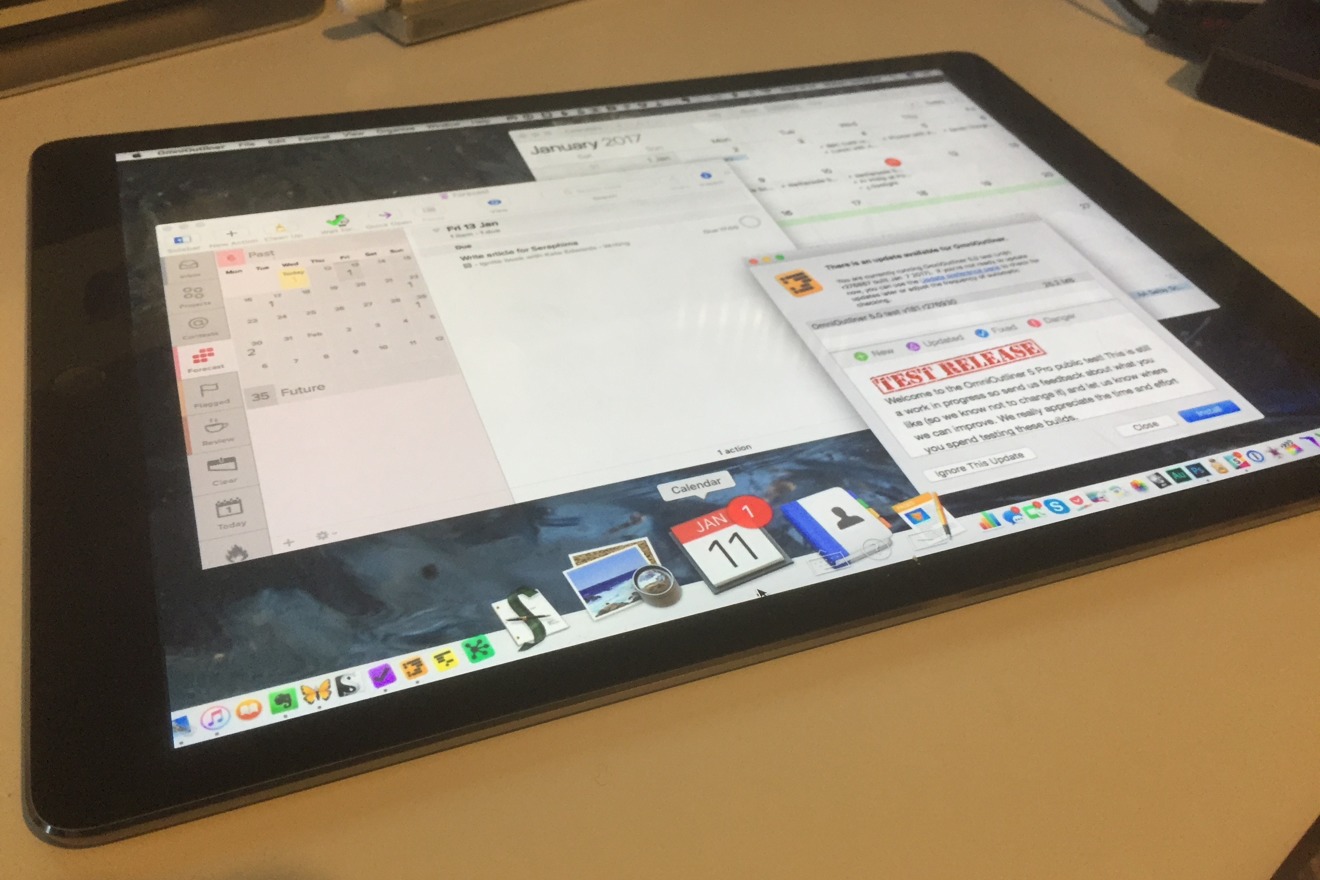
Mac Using External Monitor
Get more help
Mac External Display Only
If you've tried these steps and your display still isn't working, contact Apple Support to get more help.
Mac App Display External Monitors
Diagnostic fees may apply for issues not covered under warranty or the AppleCare Protection Plan (APP).