- Do I Need The Eclipse App On Mac Free
- Do I Need The Eclipse App On Mac Download
- Do I Need The Eclipse App On Mac Computer
- Do I Need The Eclipse App On Mac Pc
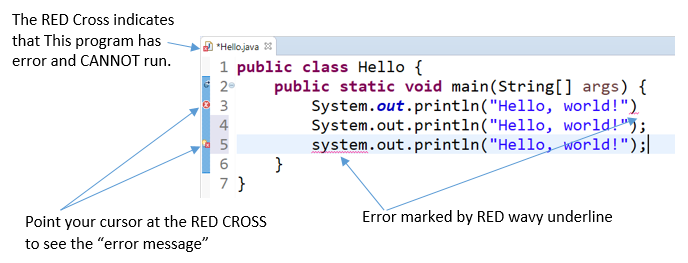
In this handout we will download Eclipse Classic 4.3 for Windows 32 Bit; if your computer uses Windows, continue below; otherwise look above the column of 'green arrows' for the label Eclipse Kepler (4.3) Packages for and in the pull-down list to its right, choose either Mac. 2) Out of all the listed options, we need to install “Eclipse IDE for java developers”. Click the 64 bit download link as shown in the image below. 3) Upon clicking the 64 bit option, you would be redirected to a download page where you can choose the server nearest to you so that you can download faster. Menu Eclipse for Mac extends the life of your display by introducing color changes to the otherwise static Mac Menu bar. This premium app comes with a free version that performs its function well. Starting Eclipse. When you unzip Eclipse, the directory layout looks something like this: eclipse/ features/ 'the directory containing Eclipse features' plugins/ 'the directory containing Eclipse plugins' eclipse.exe 'platform executable' eclipse.ini eclipsec.exe '(windows only) console executable' epl-v10.html 'the EPL license' jre/ 'the JRE to run Eclipse with' notice.html readme. Quote: 'On Mac OS X, you start Eclipse by double clicking the Eclipse application. If you need to pass arguments to Eclipse, you'll have to edit the eclipse.ini file inside the Eclipse application bundle: select the Eclipse application bundle icon while holding down.
Apple’s Xcode development system is superb for developing applications, but sometimes you just want to write C or C++ code for research or school. Composing a serious chunk of code with vi is no longer acceptable,* so users in this frame of mind are now using Eclipse, a modern IDE, that’s also free. Here’s how to get gcc without installing Apple’s Xcode and then install Eclipse for C/C++ programming.
What’s the Motivation?

At work recently, my wife was chatting with a colleague who was taking his first C++ class. She taught him how to use Eclipse on a Mac, even though he resisted at first. However, later, he came back and commented that the other students were trying to manage ever increasingly complex projects with the vi editor. It was taking them four, six, or even 20 hours in some cases to complete their homework each week. He finished his, typically, in 30 minutes. That’s the power of an IDE with a modern debugger. That last item, the debugger, can’t be emphasized enough. Print statements in your code are oh, so yesteryear with a tool like this. Time is money, and efficiency reflects on you as a programmer.
So if you’re a scientist, researcher or engineer who wants to write some research code, not intended as a GUI app, in Java, C, C++ or Fortran, you need to dump vi as an editor* (or Emacs or Nedit or whatever) immediately and get with this kind of IDE. Things are moving far too fast nowadays not to make this important move. (Clearly, I’m speaking to an older crowd here.**)
To be perfectly clear, Apple’s Xcode is a fabulous development system for C, C++, Objective-C and even Fortran 77***. You can build native OS X and iOS apps. But many researchers and scientists aren’t interested in Xcode. They’ve come from a Linux or other UNIX platform, like IBM’s AIX, and they just want to carry on their research in Eclipse on a Mac. This how-to is primarily for them. But, as I mentioned above, students who are taking their first programming class and own a Mac will also find this discussion useful — indeed mandatory. Remember, this is an introduction to whet your appetite and get you launched, not a complete Eclipse tutorial.
Also, this how-to for the sake of simplicity focuses on C/C++, but Eclipse can handle a myriad of languages, including, but not limited to, Java and Fortran. Let’s start with C/C++.
Getting the gcc Compiler
Do I Need The Eclipse App On Mac Free
As an aside, when you install Apple’s Xcode (free from the Mac App Store only in Lion), gcc is automatically installed in /usr/bin. But if you have a mind to work with just Eclipse and gcc, you’ll need a way to install gcc without, if it pleases you, installing Apple’s Xcode first. (For reference, here’s a how-to on installing Xcode and gcc.)
There are at least two places I know of where you can get a gcc installer package for OS X:
- The OS X High Performance Computing page at Sourceforge managed by Dr. Gaurav Khanna at the University of Mass.
If you find other sources, let us know.
Installing Eclipse
Here’s a handy reference on where to get Eclipse for the Mac. Version 3.7 (“Indigo”) installs nicely in Lion and seems to work okay, but our household hasn’t put it to a grueling acid test with OS X 10.7.1.
Eclipse Download for CC++, 64-bit
The download is a …tar.gz file, so move it where you want the Eclipse directory to be because when you double click it, the package will be unzipped and untared right there. After Eclipse is installed, you’ll see it as an app, just like any other, with this icon.
It’s easy to create an alias to eclipse.app, if you wish, and place it in your /Application directory. Because the Eclipse IDE itself is written in Java, if you’re running a clean copy of Lion, you’ll need to download the Java runtime before the Eclipse app will launch. Just double-click on Eclipse, and it’ll trigger the required Java runtime download. Nothing else to do. If you’re in Snow Leopard, the Java runtime is already there.
Java runtime download
This first thing you’ll see when you run Eclipse is that it asks for the location of your workspace. I typically create a directory in /Users/john called Programming where I do any code development. (Which is not much these days.)
Workspace Selection
After you select your workspace, you’ll be confronted with an Eclipse peculiarity. A welcome page will be launched that brings a real feeling of WTF to many users. Here it is.
Welcome screen
The trick is to realize that the icon on the far right, circled in red above, takes you into the workbench. For that named workspace, this one time is the only time you’ll see that screen.
Once the IDE is launched, there are just a few details before you can build a project. Again, for simplicity, lets stay with C/C++. From the Eclipse File menu, select “New” and then C++ Project.
Eclipse - New Project
Experienced Eclipse users know the drill. Name the project, make sure you’ve identified the location of your compiler in the Toolchain, and so on. (It may be different than the default install by Apple’s Xcode. The screen shot below shows Apple’s install of gcc, marked as MacOSX GCC, because I’d previously installed Xcode on that Mac.)
Configuration
Newbies may want to select the Hello World project just to see how things get set up. Make sure you work your way through the setup with Next > at the bottom and don’t click the Finish button too soon. A more detailed examination of this set up and the ins-and-outs of Eclipse are beyond the scope of this getting started article. The goal here is simply an introduction for Mac users. And you’re not alone. There’s a huge body of knowledge on the Internet about Eclipse. Here’s a start.
If all went well, you’ll be in the Eclipse IDE with the Hello World program in the editor and a Make file already created. This environment is called the Eclipse workbench.
Do I Need The Eclipse App On Mac Download
Eclipse Workbench w/ default “Hello World” code
It may take you some start-up time to learn Eclipse, but trust me, coding the old way will soon bog you down. The Xcode and Eclipse developers learn from each other, so if you ever decide to get into OS X or iOS development, having earned your wings in Eclipse will pay huge dividends later.
__________________
Do I Need The Eclipse App On Mac Computer
* I’m qualified to say this because I’ve lived and breathed vi for a living in the past.
** Remember, a lot of people are going back to school, learning or refreshing their programming skills.
*** You can write and compile Fortran 77 in Xcode with standard output, but you can’t access the Cocoa APIs and build native apps in F77.
Eclipse for Mac Free Download: Eclipse for Mac is open-source software that brings together programmers of different languages via the Java platforms. Eclipse for Mac is an integrated development environment that is the most used Java IDE. Eclipse Mac has got highly integrated tools that provide a free and universal toolset for its users. The tool provides the users of Eclipse Mac Download with the freedom to choose from multi-languages, multi-platform, and with the multi-vendor environment. Eclipse for Mac Download thus allows the programmers of various languages like Java, C, C++, Perl, Python, PHP and more to collaborate and perform with the minimum of difficulty. Download Eclipse for Mac as it gives a plug-in based framework and thus it makes creating, integrating, utilizing software tools easier. Besides, this time, money, and work time are saved as with the Eclipse for Mac Free Download. Eclipse for Macbook is a powerful cross-platform development tool that is based on Java. Eclipse Mac is built entirely in Java and however, it goes beyond java. As Eclipse for Macbook is built entirely in Java platform, one needs to have Java Runtime Environment installed to use the Eclipse Mac app. The tool producers can create new development technology in such a way that the core integration technology can be collaborated and exploited. With Eclipse for Mac, you can contribute your work, start a new project, run it or monitor the project activity.
Eclipse for Mac Free Download lets you get involved in the different projects developed by Eclipse in a way to help contribute to the success of the user. Get the superior Java editing with incremental compilation as with the Eclipse for Macbook installation. Also, the users can get Plug-in Development Environment PDE along with the complete source code for the Eclipse Platform as with the Eclipse Mac Download. Eclipse Mac’s interface is developed in such a way that it allows the user to develop tools independently and thus integrate them with the tools developed by other people. Download Eclipse for Mac particularly if you feel and want programmers of different languages to come in contact with one single platform extended via java.
Eclipse for Mac – Specifications
Application Name: Eclipse
Developer: Eclipse
Version: 4.2
Categories: Developer
Languages: English
File size: 290.5 MB
Features of Eclipse Mac
The salient features of Eclipse Mac Download are listed below
Tools & IDEs: Eclipse for Mac has been developed in such a way to provides IDEs and platforms for every other computer languages and architecture including Java, C/C++, JavaScript, PHP, Web and cloud IDEs.
Add-Ons: Platforms like Java, C/C++, PHP, JavaScript, and more of languages in the Eclipse Mac Download will deliver its software developers with the most extensive collection of add-on tools.
Project Community: The Eclipse Mac Download has more than 330 different open source projects to work on, and it can be used to discover and downloaded when needed for a better solution.
Advanced Options: Besides using java IDEs, you can download Eclipse for Mac to use the modeling tools, runtimes, other reporting tools and more.
Discover & Contribute: You can easily discover the projects, contribute it with ease, and you may even start a new project using Eclipse for Mac.
Do I Need The Eclipse App On Mac Pc
Collaborative Working Groups: Eclipse Mac Download has got Working Groups that allow the organizations to collude in the development of new innovations and their solutions.
Platform Support: Download Eclipse for Mac and get the support to work on java platform using different languages all in one place including Java, C, C++, Perl, Python, PHP and more with the minimum of difficulty.
Interface: The interface of Eclipse Mac Download is simple to use as it designed to be user-friendly in nature and is particularly useful to those who are new to programming.
Download Eclipse for Mac
Eclipse Mac is compatible with the Mac version of 10.0 and later. Download Eclipse OS here.
Click here to Download Eclipse for Mac from the official store.
Techniques To Download Eclipse on Your Mac PC
Technique One: The first technique to download Eclipse Mac app on your Mac PC is very simple. You have to click on above given “Download Link.” Once you click on the link, Eclipse app will get downloaded and installed automatically on our Mac PC. Eclipse for Mac Download via this technique is the most simple and easy way of getting Eclipse app right on your Mac desktop PC. With this, you will be able to use all the salient features of this developer software and thus create new projects in any language. Besides, Eclipse for Macbook, will let you discover the best projects and contribute your work in no time which can be used by other Eclipse app users for free. You can host new projects with the advanced toolsets, plug-ins, and runtimes of Eclipse Mac to get new innovations and solutions.
Technique Two: The second method to download EclipseMac is also simple however you require additional time to search for it and use it on the Apple device. In this method, you can get the Eclipse app directly from its official website. Once you enter into the Eclipse app’s website, you will be able to see many options on the screen, in this page, you can able to see the Orange Download Button and just make a click to get the Eclipse app on your Mac PC. Once you click the button, Eclipse app will get download and installed right on your Mac PC.
Screenshots of Eclipse
Incoming Related Searches
Eclipse for macbook
Eclipse for macbook pro
Eclipse for mac download
Download Eclipse for Mac
Eclipse for Mac download